TCA Peels: Days 2-4
What to expect on the second, third, and fourth days of a TCA peel |
After you prep your skin and make it past the pain of getting a TCA peel, the fun (the actual peeling) is just about to begin!
Here is what will happen to your skin 2-4 days after a TCA peel:
Day 2: The morning after a TCA peel
The morning after you get your TCA peel, your skin will be pink/red, feel tight, and start to look crepey. Some parts might even appear mottled and turn brown (usually in the areas where you frosted). The crepey-ness of your skin will look especially pronounced on the forehead, cheeks, and any place where you move your face the most.
To clarify, crepey skin looks like dry wrinkles. It can look glossy on the surface but feel dry underneath. If you don't make any facial expressions, you might not even see it, but it is very noticeable if you wrinkle your nose or furrow your brows. This crepe-like skin represents skin that is about to peel. It also means that the TCA peel is working!
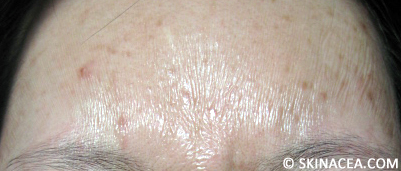
Picture of crepey skin from a TCA peel
On the day after you get the TCA peel, you still have to be very gentle with your skin while cleansing and continue to apply antibiotic cream and drink lots of water. At this stage of the peel, the goal is to keep your skin hydrated and protected. Again, you can cover up the side effects of the peel with makeup (most people don't start to flake and peel until day three), but it's best to leave your skin alone and stay indoors.
If you are staying indoors, make sure you stay away from windows (UV rays can still penetrate through them) and any other sources of sunlight. You can always wear a good sunscreen over your antibiotic cream just to be safe, but I don't like putting anything extra on my skin after a chemical peel, so I usually cover up my head with a UV proof jacket or hat and wear giant sunglasses. The TCA peel will make your skin more sensitive to sunlight, so doing the above is just taking extra precautions to prevent any kind of photodamage.
When you get a TCA peel, you expect to peel right away, but it actually takes some time for your skin to start shedding. So don't expect to peel on the second day. You can, however, encourage your skin to peel faster by regularly spritzing your face with thermal water and applying moisturizer. Absolutely do not pick at any of the crepey skin or brown spots because you don't want your skin to peel before it's ready!
Days 3-4: When your skin starts to peel
For most people, visible peeling starts on days 3 or 4, after the TCA peel has had time to work on your skin. However, some people may peel earlier or later. It all depends on your skin and how it reacts to the TCA solution.
On day 3, your skin won't be as red anymore, but you still have to be super gentle with it. It will feel very dry and look extremely crepey because you essentially have a layer of dead skin sitting on your face. The dryness might be uncomfortable and even itch. If this is the case, you can apply an anti-itch cream to ease the irritation.
How much your skin peels from the TCA peel will depend on the strength of the TCA solution and how your skin naturally reacts. Most people peel in little bits and pieces, but for those who get really strong peels (i.e. multi-layer peels, high TCA concentrations, or peels with lots of frosting), it is possible to peel in sheets.
It can be disappointing when you expect your skin to shed like a snake but it only flakes here and there. However, keep in mind that even if your skin doesn't peel off in giant skin sheets, it doesn't mean the peel isn't working. Everyone's skin is just different. Whatever you do, don't pick off any of the peeling flakes because you'll end up scarring your skin. It can be quite a slow peeling process, but be patient and let your skin peel naturally.
Using a moisturizer can actually mask some of the peeling. If your skin really dry, you could maybe see it physically peel, but keeping your skin well moisturized keeps those dry skin flakes hydrated, so even though your skin is peeling, it's just not as pronounced. This doesn't mean moisturizing your skin will make it peel any less than if it were dry. Moisturizing your skin just allows your skin to peel more comfortably, even if not more noticeably.
In general, it's better to keep your skin moisturized at all times, either with the antibiotic cream or a moisturizer of your choice. Peeling is more pronounced when your skin is dry, but dry skin is also itchy and uncomfortable. You can actually start using moisturizer instead of the antibiotic or anti-itch cream on day 3. You can even splash your face with water throughout the day or mist with a thermal spray to help your skin peel faster.
Once your skin starts to peel, it'll be close to impossible to elegantly cover up it with makeup, so it's still a good idea to stay indoors. And of course avoid the sun!
Some people don't peel at all, even 3-4 days after they get the TCA peel. This probably means that the peel wasn't strong enough for your skin. If this is the case, you can get another TCA peel done on day 5.
This actually happened to me when I got an 8% TCA peel. A 30% glycolic acid peel actually hurt more! I ended up getting a 12.5% peel done on the 5th day because I had no signs of irritation, redness, or dryness whatsoever from the 8% TCA solution. However, if your skin is crepey and dry but not peeling after the 4th day, it might just be that your skin takes longer to peel, so you should wait another day to see if that happens.
Days 2-4 of the peel are usually the worst of the post-peel process. Now that there are signs of peeling, find out how long the peeling lasts and when you should see results in the next section!
Last updated: September 22, 2012
Day 5 and Onward of a TCA peel
