Acne Treatments - Apple Cider Vinegar Toner
Using and making the ACV toner to treat acne |
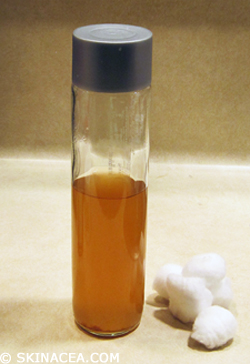 The Apple Cider Vinegar (ACV) Toner is something you can make at home to help clear your skin or simply improve your overall complexion.
Malic and lactic acids found in the vinegar help to soften and exfoliate your skin, reduce red marks, and treat acne on both your face and body. Apple cider vinegar also tones your skin to the proper pH. So basically, it's a wonderful beauty secret hiding in your kitchen cupboard!
Keep reading and I'll get to the good part about how to make this fabulous toner. It's really cheap and easy to make, so why not try it as an inexpensive at-home acne treatment?
Why does ACV work?
While ACV has antibacterial and antiseptic properties, most people have success with this toner because of how well it balances out their skin. You need to have pH-balanced skin because without it, your skin will suck. And when your skin sucks, you will probably break out. And if you don't break out, your skin will probably be too dry or too oily. Or feel irritated, red and hot... The list goes on and on.
So why does your skin become unbalanced in the first place and how does apple cider vinegar make things better?
First, you have to understand that everyone has a protective acid mantle, which is a thin layer of oil, on the outer surface of his/her skin. As the name suggests, the protective acid mantle protects your skin and keeps it acidic. Skin is naturally acidic and functions best when it's at a pH of around 5.5 (any number greater than 0 and less than 7 is acidic).
Each time you wash your face or apply a product, you disrupt this natural acid mantle. It could be because you're washing away some of your protective skin barrier or because products you're using are basic (non-acidic or alkaline) in nature. Under normal circumstances, healthy skin will bounce right back and and rebalance on its own.
However, when your acid mantle is disturbed, your skin grows vulnerable to infections and other irritations. Using harsh products, over cleaning, or even stressing out too much can cause your acid mantle to function improperly, throwing your skin's pH out of whack. As a result, many people begin to experience acne and dryness. This is where the apple cider vinegar toner comes to the rescue!
ACV has a pH of 3 and when diluted, the acidity from the toner helps bring your skin's pH back to its normal levels. By restoring your skin's balance, apple cider vinegar helps your skin function optimally, warding off bacteria and shedding dead skin cells at the proper rate so pores are unblocked and skin remains healthy.
How to make the Apple Cider Vinegar toner
So how do you make this supposedly amazing toner? (By the way, Hillary Duff allegedly uses this stuff as a spot treatment for her pimples.)
The following instructions are for 1 cup of a 50% strength ACV toner:
What you need:
- 1/2 cup of apple cider vinegar (preferably organic)
- 1/2 cup of water (preferably bottled, but tap is fine)
- Glass container for the toner
How to make the ACV toner:
- Clean and sterilize a glass bottle for storing the toner.
- Using a funnel, pour 1/2 cup of apple cider vinegar and 1/2 cup of water into your glass container.
- Shake to mix well.
- Apply toner to skin with a cotton ball. Shake well before each use.
- Store in a cool, dry, dark place.
Additional tips:
- To sterilize a glass bottle, boil it or wash it with really hot water. Be careful not to rinse hot glass immediately with cold water or the glass may shatter. Let the glass bottle cool and dry completely before using.
- Empty Voss water bottles are great for storing homemade ACV toner.
- If you are using organic apple cider vinegar with the "mother," make sure you shake it first.
- Vary the strength and quantity of the ACV toner by using more or less water or vinegar each time you make it. Experiment to see what your skin likes.
- You can customize the toner by adding other ingredients like witch hazel, green tea, aloe vera gel, etc.
Most people use a 1:1 ratio of ACV and diluted water (though some even use 100% ACV!). This basically means that you use half ACV and half water for your toner. However, since ACV is an acid, many people cannot tolerate it at this concentration. I, for example, like to use a 1:4 ratio of ACV and water.
When you first start using this toner, it's a good idea to start off with a 1:8 ratio first and see how your skin reacts. You can then make it stronger or weaker depending on how it feels. Many people also like to add green tea and/or other essential oils to give the toner extra oomph and mask its "stinky feet" scent. I'm not sure how long this toner stays fresh, but I like to make a new batch every week. I also store the ACV toner in a sterilized glass bottle.
Apple cider vinegar can be found in the oil and vinegar aisle of your local grocery store. I prefer raw, organic apple cider vinegar over regular apple cider vinegar because they feel a whole lot gentler for some reason. Your local grocery store may carry Bragg or Solana, but if not, you can always try your luck at Whole Foods or Trader Joe's.
Organic apple cider vinegars look a bit funky because they have this brownish dust settled at the bottom of the bottle. This dust is known as the "mother" and is supposedly chock full of enzymes and nutrients. If you use organic ACV, before making the toner and before applying the toner to your skin, make sure to shake well so the "mother" is evenly distributed throughout the bottle. I have tried both inorganic and organic apple cider vinegars and the inorganic one is definitely harsher. That's just me though. It really all depends on your skin.
To use your ACV concoction, put some toner on a cotton pad and wipe across your face, avoiding the eye area. Most people use this toner both morning and night, but when you are first starting out, you should probably use it only once a day to minimize the chances of irritation or allergic reaction. One of my dermatologists actually recommends to apply the toner after cleansing and to wash it off after 2 minutes. That way you rebalance the skin but do not get irritated by ACV. However, if your skin can tolerate it, it's perfectly fine to leave it on overnight or even throughout the day.
To use the ACV toner on body pimples, put some of the toner on a cotton pad and wipe on the affected areas. For acne on your back or other hard to reach places, put the toner in a spray bottle to spray on the pimples. You can also pour the toner on your back in the shower before you hop out. How long does it take to start working?
Precautions for the ACV toner
Even though the ACV toner can help with pimples, reduce oil, and improve your overall skin, there are some drawbacks:
- The ACV toner stinks. - It reminds me of dirty socks sitting, and possibly fermenting, inside a gym bag for weeks. The stronger you make the toner, the stronger it's going to smell. Unfortunately, your bathroom may even start to smell funky from all the used ACV cotton balls you throw in the trash. The good news is, you gradually get used to the smell. As you use it, you will start to not notice it anymore. The smell also reduces once it dries on your skin, so you don't have to worry too much about smelling like salad around other people. Sometimes though, when I'm walking or when I sweat, I do catch faint whiffs of apple cider vinegar, so if you're in for a hot make-out session or plan to take on a close-talker, it is possible for them to notice hints of smelly feet on your face.
- Apple cider vinegar can burn if used in strong concentrations. - It will also sting if it is applied over open wounds, like picked and/or healing pimples. Immediately upon application, the ACV toner could also make your skin flush and turn red. Often, people who experience irritation from this toner are using too much ACV - either not diluting it enough or using the ACV toner too frequently for their skin's tolerance. Also, make sure you don't get any apple cider vinegar in your eyes because it will burn like the dickens!
- People with sensitive skin may not be able to use this toner at all. - If you do use this toner, it's a good idea to wear sunscreen and/or stay out of the sun since it exfoliates your skin, making it a little more sensitive to UV rays. For people with especially sensitive skin who want to try this toner, it is best to and apply it at night. This is a little counter-intuitive because some people say to put ACV on sunburns to speed up the healing process.
- Some people may experience purging. - Not everyone will purge when using the ACV toner, but it is a possibility for some people. Because apple cider vinegar is an acid and it exfoliates the skin, it can cause an "it gets worse before it gets better" situation as the exfoliating action brings clogs inside your skin to the surface of your skin. To minimize the chance of purging, introduce the ACV toner to your skin gradually. To figure out if you are purging or just breaking out, please check here.
Other health benefits of ACV
Besides putting apple cider vinegar on your skin, many people claim it does amazing things when taken internally. For more information and testimonials on the benefits of drinking apple cider vinegar, check here.
My personal experience with ACV
I actually used this ACV toner for a few months and noticed that it did improve my acne. It didn't prevent the big, deep pimples from forming, but it helped with the smaller ones and overall skin texture. However, because it smelled bad and I found a store-bought product that worked just as well without the stench, I stopped using this toner. If you're looking for a cheap, easy to make acne treatment though, apple cider vinegar is one of the better at-home remedies I've tried.
Bottom line: The ACV toner is so cheap and easy to make and so easily customized to your skin, that it is worth trying for acne and other skin issues.
Last updated: October 16, 2013
Back « Acne Treatment List
Related articles:
- Use Retinoids the Right Way
- Wear Sunscreen the Right Way
- Facial Procedures: TCA Peels
- How to Choose the Right Moisturizer
- FAQ: Can I get a facial if I have active acne?
