10-Step Guide for Treating Acne
A 10-step plan for clear skin and when to seek help |
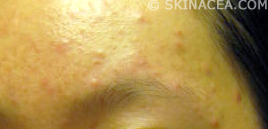
Successfully treating acne is one of the hardest things to figure out. For me, finding out how to keep my skin clear is right up there with rocket science. Why is it so hard?
Because not only is everyone's skin different, there are also so many products out there that it's difficult to know what will work and where to start! Everyone's skin is also so different that what works for one person may or may not work for you. Additionally, acne can be as much internal as it is external, so finding your way to clear skin can get very overwhelming, very fast.
Whatever your skin situation, treating active acne only treats the symptom and not the cause. To truly clear your skin, you must figure out why you are breaking out and learn how to prevent that from happening. The purpose of this 10-step guide is to help you do just that.
Keep in mind that this 10-step guide is not a comprehensive step-by-step plan that will guarantee clear skin. Instead, it's simply an outline for how to approach treating your acne and how to customize acne treatments to your skin's individual needs. It's for people who are fed up with their acne and feeling lost about what to do.
This acne treatment guide starts off by explaining how acne treatments work before delving into the 10 step process you should take to start treating acne. It ends with some information about when you should stop trying to treat acne on your own and when you should seek professional help.
How Do Acne Treatments Work?
Acne treatment products help control your breakouts by doing some or all of the following things:
- Helping your skin shed faster and at a more normal rate - ex. Exfoliants, BHAs, retinoids
- Killing bacteria - ex. Antibiotics, benzoyl peroxide, tea tree oil
- Reducing inflammation - ex. Azelaic acid, antibiotics, diet
- Drying out the pimple - ex. Sulfur
- Balancing your hormones - ex. Birth control pills, anti-androgens, lifestyle changes
- Eliminating oil - ex. Accutane
Many of the above acne treatments can be pretty harsh, but you don't have to be aggressive with the rest of your skin care routine to get clear skin. Please understand that you can't scrub or wash away pimples.
If you think about it, acne treatments are trying to kill off your existing pimples and help your skin change for the better, but if you start using cleansers that are too drying or over-scrub your face every day, you aren't giving your skin time to react and heal from all the treatment products. This is why many people see their skin clear up when they stop using products (ex. "caveman routine") and use only water.
It can be really frustrating to be nice to your skin when your skin isn't being nice to you, but it helps to think of it as a separate living organism. You need to nourish, love, and be gentle to it so it can thrive, be happy, and love you back. Understanding how an acne fighting active works will help you select the most suitable product for your skin.
Skinacea's 10 Step Guide to Clearing Your Skin
Figuring out which acne treatments will work for you is a long trial-and-error process that takes a lot of patience and willpower. You pretty much have to go through all sorts of products, test drive them, and weed out the bad apples until you find the things that actually work.
Most dermatologists and skin specialists recommend a three-pronged attack for initial acne treatment: 1) kill bacteria, 2) exfoliate pores, and 3) eliminate oil. While this slash-and-burn technique (i.e. prescribe a retinoid and antibiotic) may work for some people, it is hard to say whether this plan of attack has a high success rate because everyone's skin responds so differently.
I tend to agree with 1) and 2), but have a hard time understanding how you can eliminate oil from your skin. You do have to control bacterial growth (either with antibiotics, benzoyl peroxide, topicals, or just being gentle with your skin so your don't ruin your natural acid mantle) and exfoliating your pores will help keep them clear (with retinoids, BHAs, etc.) but to eliminate oil, you'll need more drastic measures such as Roaccutane (Accutane), which not everyone with acne needs. Your skin also needs oils to function properly and to form a protective skin barrier, so completely eliminating oil doesn't make a whole lot of sense.
Instead of following such a rigid plan, here's a general outline of the steps you should take to help you figure out how to start treating your acne and clear up your skin:
- Learn about what type of skin you have. This will help you choose appropriate products to use on your face. Your skin changes with weather and age, so always pay attention to what it tries to tell you. For example, if your skin gets too dry, back off on any treatment products and/or use more moisturizer (especially if it's cold and windy).
- Have a gentle, basic skin care routine. This means using skin care products that do not overly dry or irritate your skin. Even if you have pimples, it doesn't mean your skin can't be healthy and non-irritated, so you should always aim for your skin to feel as "normal" or "neutral" as possible. For instance, a cleanser should not make your skin feel tight after you wash your face. If it does, it is not gentle enough for your skin. When it comes to skin care, the simpler the better!
- Understand the causes of acne and what's causing your acne. If you know why your skin is breaking out, it will give you a better idea of how to start treating it and what treatment to use. Go through the list of acne causes and narrow down potential acne culprits. First, tackle topical products - make sure what you are using on your skin (and this can be anything from shampoo to moisturizer to laundry detergent) isn't breaking you out. Check product ingredients to avoid using anything pore-clogging. Once you rule out topical factors, you can then test internal reasons (i.e. diet, hormones, etc.) for your acne. It can be difficult to tell what's causing your acne and it can take a long time, but if you test out an acne culprit and your skin gets better, chances are the culprit you tested is what's making you break out.
- Familiarize yourself with all the different available acne treatments (both topical and internal). Read about how they work, look at the both active and inactive product ingredients, read product reviews, and do as much research as you can before you buy or use anything. Test out new products on a small part of your skin before using it all over your face. This will help you learn how much and how frequently you should apply a certain product. Also, if one acne treatment didn't work for you, it doesn't mean that no acne treatments will work. Look at the active ingredient in the treatment that didn't work and try another acne treatment with a different active. For example, if benzoyl peroxide did nothing for your pimples, look into using an AHA next. You may also want to try a different product with the same active ingredient because some actives are more effective in certain formulations. For instance, I will try 2-3 different BHA products before I rule out BHA as an ineffective acne fighter for my skin.
- Use one acne treatment at a time. It's tempting to blast your skin with everything in the book (ex. BHA in the morning with benzoyl peroxide on top and then an AHA at night with a retinoid on top) to try to get it to clear faster, but if you use more than one new treatment on your skin at a time, you won't know which one is working or which one is making your skin worse. Treating acne is like conducting a science experiment with your skin. Testing one variable at a time will allow you to come to a clear conclusion about whether a certain product it works or not. Too many variables at the same time muddles the conclusion.
- Treat one skin issue at a time. It's tempting to want to treat active acne, red marks, and acne scars all at the same time. However, doing so will only complicate the process of clearing your skin. What if an acne scar treatment breaks you out even more? And what if you use something that helps with your acne marks but you keep getting acne? The new acne you get will give you new marks, so you'll have to keep treating the marks anyway. It's best to treat pimples first to prevent them from forming and then treat acne marks and scars after your skin is clear.
- Don't over-use acne treatments. Washing your face 5 times a day and putting on pimple cream every single hour won't make an acne treatment work any better or faster. In fact, when you over-use acne treatments, you end up drying out your skin and irritating it, making it more prone to getting future acne. Being overly aggressive with acne treatments is actually one of the main ways you can self-induce acne! How much and how often you should use a treatment product depends on your skin. If it is getting sensitive, reduce the product application. If you can use more without experiencing side effects, then use more. There really is no absolute way to use a product, so all treatments should be customized to your skin's personal needs.
- Don't pick at your skin. When you pop and squeeze your pimples, you spread bacteria and increase the odds that you will get more future breakouts. Even if a zit looks like it's about to pop, keep your hands away from your face at all times. It may not seem like it does much in the short run, but not picking at your face will help clear your skin faster in the long run. If you really can't help it, instead of squeezing, try putting a warm compress on the spot instead.
- Give acne treatments time to work and give pimples time to heal. Be patient! It usually takes two weeks for a pimple to form, so you should give a product at least 2-3 weeks (a month or more is better) to see if it will work. Acne doesn't canvass your face overnight (if it does, it might be an allergic reaction instead of actual acne), so it takes time for it to leave your skin too. Use one treatment product for at least 2-3 weeks to see if it will work before trying a new treatment product.
- Remain optimistic! If one treatment product doesn't work, that just means you are one step closer to finding the acne treatment that will. Remember, you are beautiful both inside and out! In my experience with acne, the more you think about acne and the more you try to do to your skin, the worse it gets and the longer it takes to clear. But once you stop fixating on it so much, it starts to go away. "Mind over matter" might not have any true tangible effects on acne, but it definitely makes the emotional part of treating acne easier to handle. So, don't let acne take over your life! Shift all the negative energy you have about acne to something positive in your life.
As you can see, the process for treating acne can be very confusing and frustrating. It's riddled with "what ifs." There's also the whole "it gets worse before it gets better" type of mentality, so lots of people will stick with a product that's making their skin worse in the hopes that there will be a light at the end of the tunnel. Sometimes this risk pays off and sticking it through does give you clear skin. Other times it doesn't and really does end up making your skin worse.
As confusing as it can be, never give up on your skin! Arm yourself with as much information as possible. Google everything and look up reviews for new skin care products you're thinking about using. This is your skin we're talking about here and no one will care more about your skin than yourself.
When to Seek Professional Help
When most people start getting acne, they usually turn to drugstore options first. (A word of advice: before you put anything on your skin, look over the skin care section to get a good idea of how to take care of your skin and choose good products. You want to be able to take care of your skin's basic needs before tackling skin problems like acne, wrinkles, etc).
If over-the-counter acne treatments are not cutting it for you, then it's time to seek professional help. It's also time to see a dermatologist when your acne escalates from mild to moderate or severe. I know some people think that dermatologist visits are too expensive (and they definitely can be) but sometimes it's more worth it to get professional advice instead of shelling out lots of money for over-the-counter treatments that end up not working anyway. Also, dermatologists and doctors are the only way to get prescription products and if you need more aggressive treatments for your acne, you won't have access to them without a doctor.
However, don't expect a visit to the dermatologist to be a ticket to clear skin. Just because you go to a skin care professional doesn’t mean you will get to bypass the trial-and-error process of treating acne. Like over-the-counter treatments, prescription products still require a test driving period. Dermatologists may offer good guidance to shorten your trial-and-error endeavor, but you will still have to figure out what works best for your skin on your own.
Be selective about picking your dermatologist because many of them don't care. I've been to four different ones before finding one that actually takes time to talk me through everything. I've also been to several dermatologists who prescribe products without even telling me how to use them before sending me out the door. But good dermatologists do exist! Ask your friends or check out doctor reviews to find the better dermatologists in your area.
Also, for whatever products or treatments (facials, laser, etc) your doctor recommends, make sure you do your own homework. Don't rely on the dermatologist to tell you everything because you are ultimately responsible for your skin and what you do to it.
After all these years, I have learned one thing though: there is no acne cure. No pill or cream can cure acne and make it so that you will never ever get another pimple in your life. It's also important to not get too fixated on finding that one product that will get rid of your acne because it could be a number of factors that end up clearing your skin.
Having acne sucks, but hang in there! The human body is an amazing healing organism and even if your skin is in the pits now, there's always a silver lining. For me, having acne was an awful experience, but my silver lining was learning more about skin and being able to take good care of my skin (and share the information too!) for the rest of my life.
For a comprehensive list of over-the-counter, prescription, and at-home acne treatments, check here.
Last updated: May 6, 2013
Related articles:
- My Acne Before and After Pictures
- How to Get Rid of a Cystic Pimple
- Glycolic Acid Chemical Peels for Your Skin
- FAQ: Am I purging or breaking out?
- Product Recommendations: Acne Treatments
